
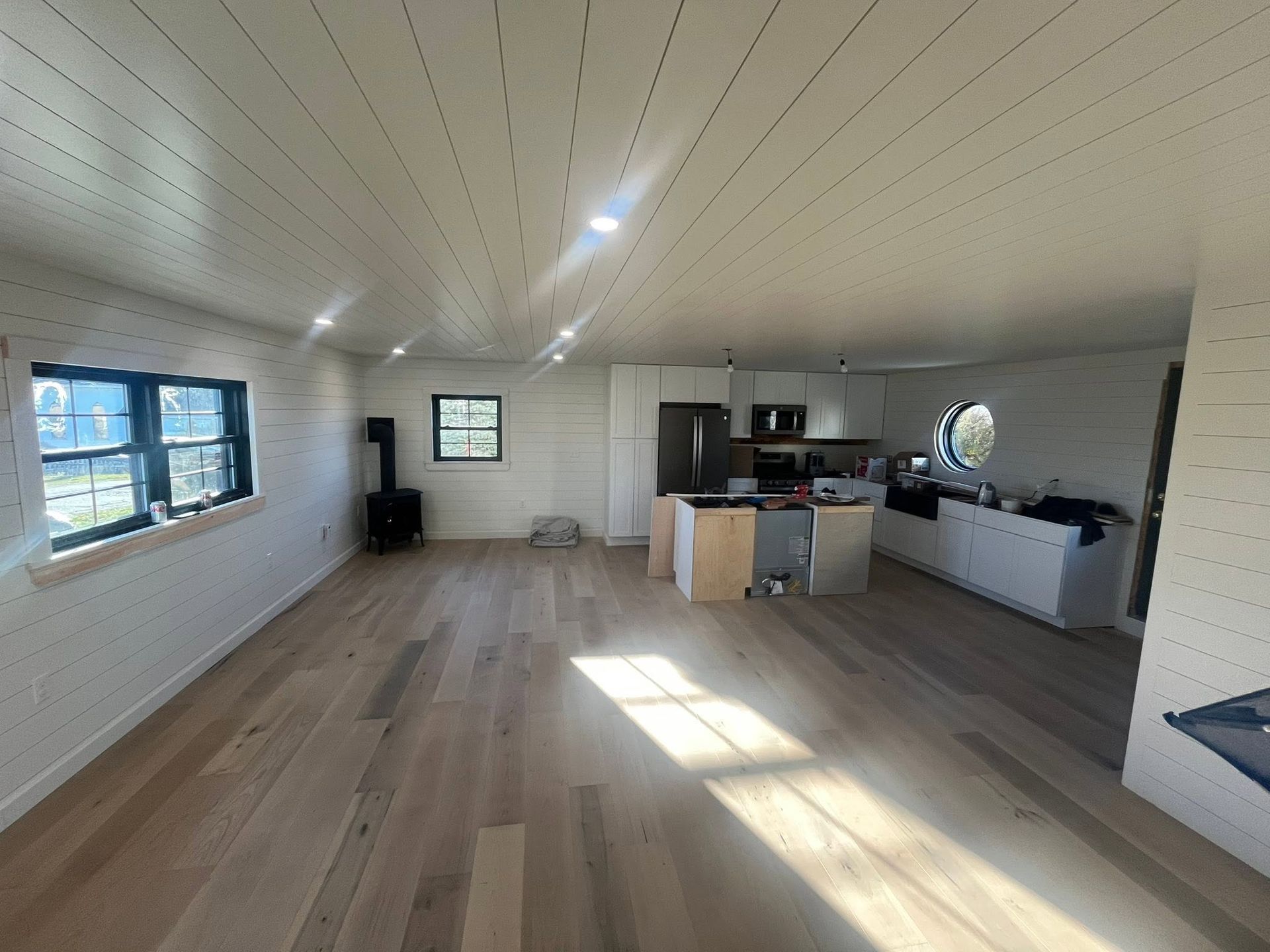
Floors Built to Handle Humidity Changes
Wood, Laminate, or Stone Flooring in Trescott Township for homes with outdated flooring or moisture-damaged surfaces
Coastal Maine humidity fluctuates dramatically between winter heating and summer moisture, causing wood floors to expand and contract unless properly acclimated before installation, and laminate to delaminate if moisture barriers fail. Stone flooring in older Trescott Township area homes requires proper sealing to resist salt air and moisture that penetrates grout lines. Over The Top Builder LLC installs wood, laminate, and stone flooring in area homes, managing subfloor preparation and moisture control that prevents the buckling, cupping, and grout failure seen when installations ignore local conditions.
Subfloor moisture testing happens before any material arrives, because readings above acceptable thresholds cause wood to cup and laminate adhesives to fail within months of installation. Leveling compound corrects dips and high spots that would cause stone tiles to crack or wood planks to flex underfoot, and materials acclimate in the space for days to match the humidity level they'll experience after installation. Wood and stone receive sealers that protect against moisture penetration, and underlayment beneath laminate provides vapor barriers that prevent subfloor moisture from reaching the flooring surface.
Schedule a property evaluation to test subfloor moisture levels and discuss flooring material options suited to your home's humidity patterns.
What Changes After Flooring Installation
Material acclimation prevents the dimensional changes that cause gaps between planks during winter or buckling during humid summers, and proper moisture barriers stop subfloor dampness from telegraphing through to the finished surface. Transitions between flooring types receive trim pieces that allow independent expansion without creating trip hazards, and stone grout joints are sealed to prevent water absorption that leads to efflorescence or grout crumbling in coastal environments.
You'll notice floors remain level without developing soft spots where underlayment wasn't addressed, wood maintains consistent gaps between planks rather than opening wide in winter or compressing in summer, and stone surfaces shed water without staining or grout discoloration. Sealed wood resists the moisture absorption that causes cupping at plank edges, and laminate surfaces don't show the edge swelling that happens when vapor barriers fail to block subfloor moisture.
Material delivery and acclimation timelines are coordinated with other remodel phases so flooring installation happens after wall and ceiling work eliminates dust and moisture sources that could compromise the finished floor. Trim installation follows flooring to hide expansion gaps required for seasonal movement.
Questions Before Starting Your Project
Flooring installations in older coastal homes involve subfloor conditions and material behavior that affect long-term performance and appearance.
What subfloor moisture levels prevent flooring installation?
Wood flooring requires subfloor readings below twelve percent, and concrete slabs need readings under four percent, or the flooring will absorb excess moisture and develop cupping or delamination regardless of material quality.
How does acclimation time affect wood flooring in Trescott Township?
Wood planks delivered from warehouses have different moisture content than your home's interior, and allowing three to five days for equilibration prevents expansion after installation when planks absorb humidity from the air.
What sealing do stone floors need in coastal Maine?
Grout joints absorb moisture and salt air unless sealed after curing, and natural stone surfaces require penetrating sealers that prevent water absorption while allowing vapor transmission from below.
When should flooring installation happen during a remodel?
Installing floors after drywall, painting, and ceiling work are complete prevents finish damage from falling tools or dust contamination in freshly applied sealers.
What causes wood floors to cup or crown after installation?
Moisture from below makes edges rise higher than plank centers, creating a cupped profile, while moisture on top causes centers to swell higher than edges, and both result from inadequate moisture barriers or ambient humidity extremes.
Over The Top Builder LLC coordinates flooring with other remodel phases and manages material acclimation timelines to prevent moisture-related failures common in Maine's coastal climate. Arrange a consultation to review subfloor conditions and discuss realistic installation schedules based on material choice and project scope.